Mastering the Art of Digital Botanical Line Art for Modern Design Applications
In the ever-evolving landscape of digital design, there is a profound return to simplicity and organic forms. Among the most versatile and enduring styles in contemporary graphic arts is botanical line art. This aesthetic, characterized by clean strokes, minimal shading, and an emphasis on natural structure, bridges the gap between scientific illustration and modern minimalism. For designers, creators, and business owners, understanding how to leverage high-quality botanical assets is not merely about decoration; it is about enhancing brand identity, improving user experience, and creating tangible products that resonate with audiences seeking authenticity.
The Enduring Appeal of Minimalist Nature Illustrations
Botanical line art has transcended fleeting trends to become a staple in visual communication. Its popularity stems from its inherent versatility. Unlike photorealistic images, which can dominate a layout and clash with typography, line art serves as a complementary element. It provides visual interest without overwhelming the viewer. This subtlety makes it an ideal choice for a wide array of applications, from corporate branding to personal creative projects.
The psychological impact of nature-inspired imagery cannot be overstated. In a digital world saturated with noise and vibrant, aggressive colors, the calmness of black-and-white or monochromatic plant illustrations offers a visual respite. This "biophilic" design approach taps into our innate connection to nature, fostering a sense of tranquility and balance. When integrated into web design or printed materials, these elements can subtly influence mood and perception, making content feel more approachable and grounded.
Technical Versatility: Understanding File Formats
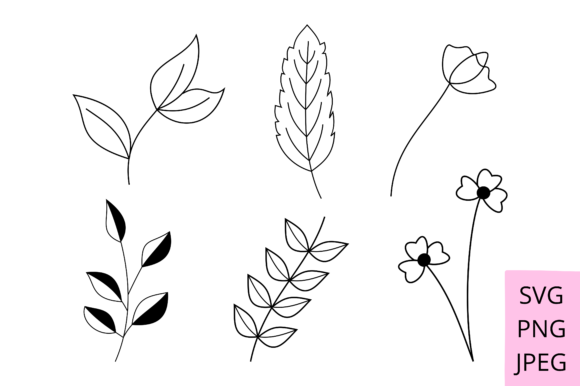
To truly harness the power of a 6 Elements Botanical Line Art Graphic Collection, one must understand the technical specifications that make these assets usable across different mediums. The value of such a collection lies not just in the artistic quality of the drawings, but in the flexibility provided by multiple file formats. A comprehensive package typically includes SVG, PNG with background, transparent PNG, and JPEG files. Each format serves a distinct purpose in the design workflow.
Scalable Vector Graphics (SVG)
The SVG format is arguably the most critical asset for modern web and print design. As a vector format, it uses mathematical paths rather than pixels to define the image. This means the artwork can be scaled to any size—from a tiny favicon to a massive billboard—without any loss of quality or resolution. For web developers, SVGs are lightweight, leading to faster page load times, which is a crucial factor for SEO and user retention. Furthermore, SVG code can be manipulated via CSS, allowing designers to change the color of the line art dynamically to match brand guidelines or interactive states without needing to edit the original file.
Portable Network Graphics (PNG)
PNG files are essential for raster-based applications. The inclusion of both standard PNGs and transparent PNGs offers significant workflow advantages. A PNG with a white background is ready for immediate use in documents or simple layouts where isolation is not required. However, the transparent PNG is indispensable for layering. It allows the botanical elements to be placed over photographs, colored backgrounds, or textured papers without carrying a distracting white box around the image. This transparency is vital for creating professional-looking composite images for social media posts, digital invitations, and website headers.
JPEG for Universal Compatibility
While less flexible than SVG or PNG, the JPEG format remains a universal standard. It is widely supported by all image viewing software and social media platforms. JPEGs are particularly useful for quick previews, email attachments, or situations where file size needs to be minimized for non-critical displays. Having this format ensures that the botanical line art graphics are accessible to users who may not have advanced design software capable of handling vector files or transparency layers.
Diverse Applications Across Industries
The utility of a curated botanical collection extends far beyond simple decoration. By understanding the specific needs of different industries, creators can apply these graphics in ways that add substantial value.
Branding and Identity
For businesses in the wellness, beauty, organic food, or sustainability sectors, botanical line art is a powerful tool for storytelling. It communicates values of purity, growth, and natural integrity. These graphics can be integrated into logo designs, packaging labels, and business cards. For instance, a skincare brand might use delicate leaf outlines on their product boxes to suggest gentle, plant-based ingredients. The consistency of using a cohesive 6-element collection ensures that the brand maintains a unified visual language across all touchpoints.
Web and UI/UX Design
In web design, these graphics serve as excellent dividers, background patterns, or accent icons. Because they are typically monochromatic, they do not compete with primary calls-to-action or key content. Designers can use the SVG versions to create animated interactions, such as leaves that gently sway when a user hovers over a menu item. This adds a layer of sophistication and interactivity that enhances the user experience without compromising performance.
Print-on-Demand and Merchandise
The rise of print-on-demand services has democratized product creation, and botanical line art is a top seller in this market. The high-contrast nature of line art makes it ideal for printing on various substrates. Whether it is screen-printed on cotton t-shirts, sublimated onto ceramic mugs, or embossed on paper goods, the clean lines remain crisp and legible. Creators can mix and match the six elements to create unique compositions for tote bags, phone cases, and home decor items like throw pillows or wall art prints.
Event Stationery and Invitations
Weddings, baby showers, and corporate events often require elegant, customized stationery. Botanical line art provides a sophisticated framework for invitation cards, save-the-dates, and menus. The minimalist style pairs beautifully with serif typography, creating a classic yet modern aesthetic. Because the designs are available in transparent PNGs, event planners can easily overlay text onto the graphics or place the botanical elements around the borders of the card without complex masking techniques.
Implementation Strategies for Creators
Integrating these graphics into your projects requires a strategic approach to ensure they enhance rather than clutter the design. Here are several considerations for effective implementation:
- Maintain Visual Hierarchy: Use the botanical elements to guide the eye. Larger, more detailed illustrations can serve as focal points, while smaller, simpler leaves can act as subtle accents or bullet points.
- Consistency in Style: Stick to the same line weight and artistic style throughout a project. Mixing thick, bold lines with thin, sketchy ones can create visual dissonance. A 6-element collection is designed to be cohesive, so utilizing all parts ensures harmony.
- Color Adaptation: While black and white is classic, do not hesitate to experiment with color. SVGs allow for easy recoloring. Soft pastels, earth tones, or even bold, contrasting colors can transform the mood of the illustration to better suit specific campaigns or seasons.
- Whitespace Management: Line art thrives in environments with ample whitespace. Avoid crowding the illustrations with too much text or other graphic elements. Let the breathing room around the botanical forms emphasize their elegance.
Enhancing Product Value Through Quality Assets
For educators and researchers, botanical line art can serve as an educational tool, illustrating plant anatomy in textbooks or presentations. The clarity of line drawings often makes structural details easier to understand than photographs, which may contain distracting shadows or background noise. In academic publishing, the scalability of SVGs ensures that diagrams remain sharp in both digital PDFs and printed journals.
For hobbyists and DIY enthusiasts, these collections offer a low-barrier entry into professional-grade design. With pre-made, high-quality assets, individuals can create personalized gifts, home decorations, or scrapbooking pages without needing advanced illustration skills. The availability of multiple formats means that whether they are using a simple word processor or advanced design software, they can find a file type that works for their needs.
Ultimately, the value of a Botanical Line Art Graphic collection lies in its adaptability. It is not just a set of images; it is a design system that supports creativity across multiple platforms and mediums. By choosing assets that offer technical flexibility and aesthetic timelessnes, creators and businesses can produce work that is not only visually appealing but also functionally robust. Whether used for a subtle web accent or a bold statement on a coffee mug, these elements bring a touch of the natural world into our digital and physical spaces, enriching the visual experience for everyone involved.