The Eye of God: Unlocking Creative Potential with High-Quality Vector Graphics
In the vast landscape of digital design, certain symbols transcend their original contexts to become powerful tools for modern creativity. One such symbol is the Eye of God, often visually represented as intricate geometric patterns or sacred geometry. For designers, crafters, and entrepreneurs, accessing high-quality digital assets of this motif is not just about aesthetics; it is about leveraging precision, scalability, and versatility in creative projects. This article explores the significance of the Eye of God graphic, the technical advantages of vector-based files, and how you can utilize these resources to elevate your work across various mediums.
What Is the Eye of God in Design?
The term "Eye of God" can refer to several cultural and spiritual concepts, but in the realm of graphic design, it frequently denotes complex, symmetrical patterns that evoke a sense of harmony, balance, and mysticism. These designs are often rooted in sacred geometry, a philosophy that ascribes symbolic and sacred meanings to certain geometric shapes and proportions. Whether used in spiritual contexts, bohemian decor, or modern abstract art, the visual impact of the Eye of God is undeniable.
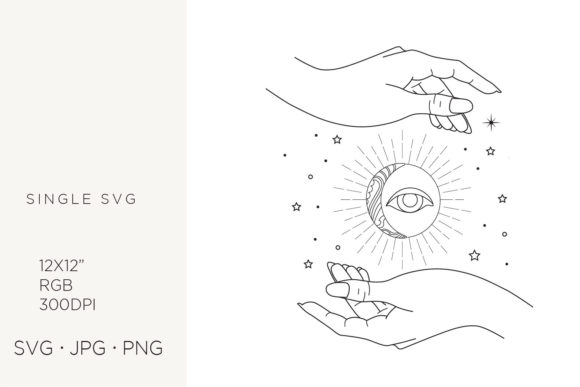
When you download a professional-grade digital package for this motif, you are not merely getting a picture. You are acquiring a toolkit. A typical high-quality asset pack includes files in multiple formats—specifically SVG, JPG, and PNG—created with precision in industry-standard software like Adobe Illustrator. Understanding the difference between these formats is crucial for maximizing the utility of your purchase.
The Technical Advantage: Vector vs. Raster
To truly appreciate the value of these files, one must understand the distinction between vector and raster graphics. The core file provided in premium packs is the SVG (Scalable Vector Graphic). Unlike raster images (such as JPG or PNG), which are made up of pixels, vector graphics are based on mathematical paths. This means they can be scaled infinitely without losing quality.
Consider the specifications often cited in professional listings: an artboard size of 12 x 12 inches at a resolution of 300 DPI (Dots Per Inch) in the RGB color palette. While 300 DPI is the standard for high-quality printing, the vector nature of the SVG means that resolution becomes irrelevant when scaling up. You can enlarge the Eye of God design to the size of a billboard, and the lines will remain crisp and sharp. This flexibility is indispensable for professionals who need one design to work across business cards, websites, and large-format wall art.
Practical Applications for Creators and Businesses
The versatility of the Eye of God graphic allows it to fit seamlessly into a wide array of projects. Because the files are made in a vector program like Adobe Illustrator, they are easy to edit, recolor, and manipulate. Here is how different creators can leverage these assets:
- Logo Design and Branding: For businesses focused on wellness, yoga studios, spiritual coaching, or boutique jewelry brands, the Eye of God serves as a compelling central element for a logo. The SVG format allows designers to isolate specific parts of the pattern, adjust line weights, and integrate typography effortlessly.
- Wall Art and Home Decor: The symmetry and detail of sacred geometry make it ideal for large-scale prints. Artists can use the high-resolution JPG or PNG files for immediate printing, or import the SVG into cutting machine software to create layered paper art or vinyl decals.
- Handmade Craft Items: Crafters using digital cutters (like Cricut or Silhouette) rely heavily on SVG files. The clean paths of a vector file ensure that cuts are precise, allowing for intricate designs in materials ranging from cardstock to wood and acrylic.
- Stationery and Invitations: Whether for wedding announcements, party decor, or handmade cards, the elegant lines of the Eye of God add a touch of sophistication. The RGB color palette ensures that the colors look vibrant on screens, while the CMYK conversion (often done during the print preparation phase) retains the integrity of the design on paper.
Expanding Into Web and Graphic Design
Beyond physical products, these digital elements are vital for web design. The SVG format is particularly valuable for developers and UI/UX designers because SVG files are lightweight and code-based. They load faster than heavy image files and can be animated using CSS or JavaScript. Imagine an Eye of God icon that slowly rotates or pulses on a landing page; this interactivity enhances user engagement without compromising site performance.
Furthermore, graphic designers can use these elements as textures or backgrounds. By adjusting the opacity and blending modes in software like Photoshop or Illustrator, the intricate patterns can serve as subtle, sophisticated backdrops for text-heavy documents, reports, or social media graphics.
Common Misunderstandings About Digital Assets
Despite the availability of high-quality resources, many beginners struggle with file management. A common misconception is that a JPG file is sufficient for all purposes. While JPGs are universal and easy to view, they are lossy compressed files. Every time you save a JPG, it loses some data. More importantly, they cannot be scaled up. If you attempt to print a small JPG on a large poster, the result will be pixelated and blurry.
Another misunderstanding involves the RGB color palette. RGB (Red, Green, Blue) is designed for screens. If you are creating digital content for websites, social media, or apps, RGB is the correct choice. However, if you are sending your design to a professional printer for physical items like invitations or jewelry packaging, you will eventually need to convert the file to CMYK (Cyan, Magenta, Yellow, Key/Black). Starting with a vector file makes this conversion process much smoother, as vectors retain their color data more effectively than flattened raster images.
How to Choose the Right File Format
To help you decide which file to use for your project, consider the following guide:
- Use SVG when: You need to scale the image to any size, you are using a cutting machine, or you are designing for the web. This is your master file.
- Use PNG when: You need a transparent background. PNGs are great for overlaying the Eye of God design onto photos or colored backgrounds in digital compositions.
- Use JPG when: You need a quick preview, are sharing the image on social media where file size matters, or are sending a low-stakes proof to a client. Ensure the resolution is 300 DPI if printing is intended.
The Role of Quality in Professional Results
The phrase "garbage in, garbage out" holds true in design. Using low-resolution, poorly constructed files can ruin an otherwise beautiful project. When you invest in digital graphics elements created in Adobe Illustrator, you are ensuring that the nodes and paths are clean. This means fewer errors when cutting, smoother gradients when printing, and easier editing when customizing.
For those new to design, starting with a high-quality base file reduces frustration. It allows you to focus on creativity rather than troubleshooting technical glitches. Whether you are designing a unique piece of jewelry packaging or a complex web interface, the foundation of your work matters.
Conclusion
The Eye of God is more than a mystical symbol; it is a versatile design element that bridges the gap between spiritual aesthetics and modern digital utility. By understanding the technical strengths of SVG, JPG, and PNG formats, and recognizing the power of vector-based creation in Adobe Illustrator, you can unlock a new level of professionalism in your work. From handmade cards to corporate branding, these digital assets provide the flexibility and quality needed to stand out in a crowded marketplace. Embrace the precision of vector graphics, and let your creativity scale without limits.
For more insights on digital design tools and techniques, explore our other resources on graphic design fundamentals and vector art best practices.